
by Sophie Girard
A few weeks ago, when I texted my friend that I got tickets for us to see an advanced screening of Barbie the day after we had tickets to see the one woman show that inspired Fleabag, she excitedly responded ”I love being a woman!” I heart-emoji reacted, because solidarity, but was disappointed to realize that I didn’t share the sentiment. I don’t hate being a woman…it kinda just sucks a lot of the time. I mean, I love being alive, and I love my body, but I don’t exactly love the concept of being a woman in our society.
That’s why, I think, I was especially excited to escape to Barbieland and imagine life in a society where “she’s everything and he’s just Ken”. I hoped the movie would dazzle me with so much girl-power and sapphic subtext that I would forget about the wage gap and Republicans trying to take away my rights.
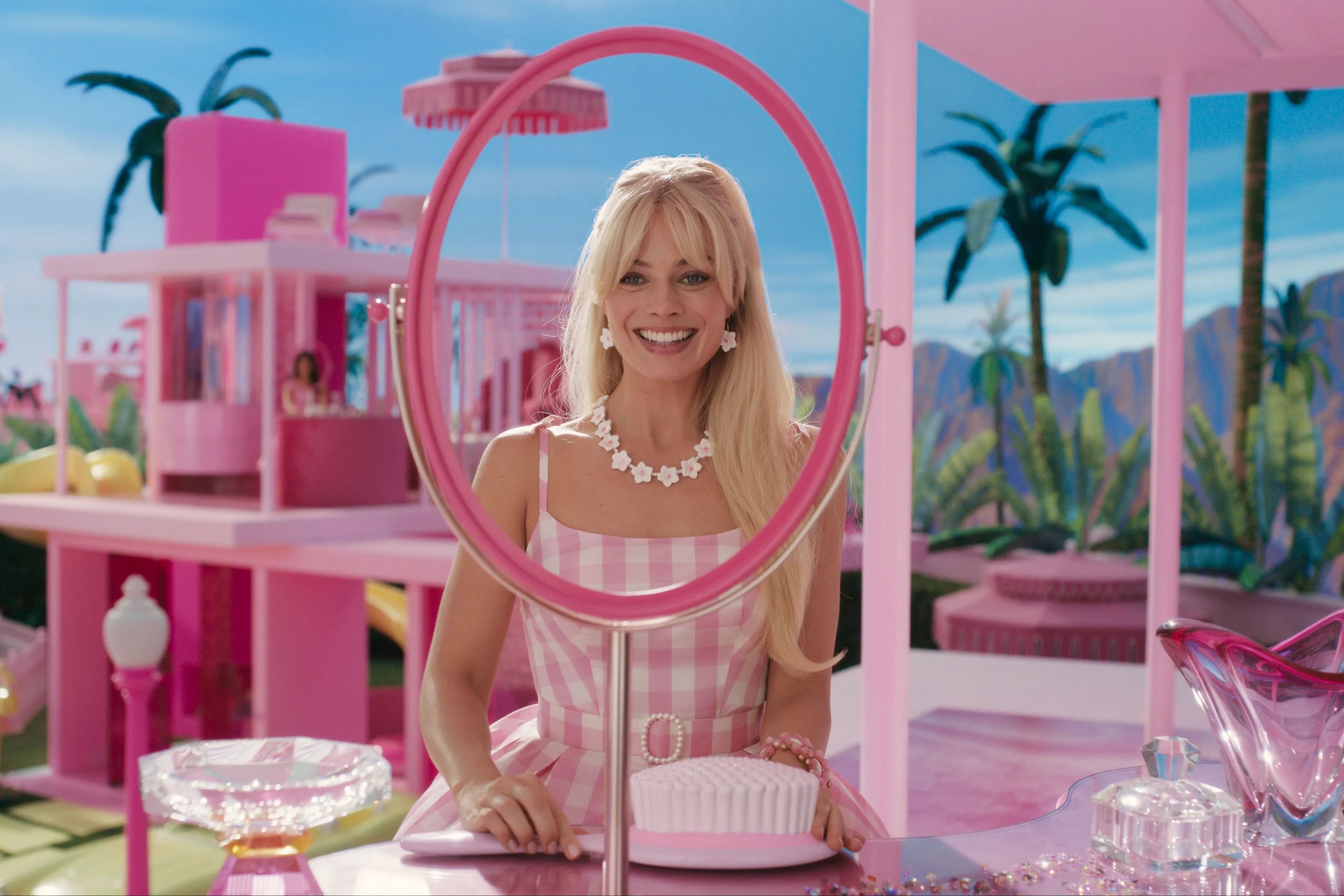
And it did! For about 30 seconds. A montage of unapologetically confident and impeccably camp women girlbossing all over Barbieland made my heart sing. But I was hoping for full blown cardiac arrest, and got maybe a few heart palpitations at best.
It is inspiring to see all the ingredients for a matriarchal utopia come together in one magical place. You’ve got heaps of intersectionality, women in positions of power, and supportive female friendships. And then, of course, when Barbie enters the “Real World” and sees how much our reality is lacking, you get a healthy dose of clever criticism.
However, there is one ingredient I did not expect there to be so much of: testosterone. Kens are the charming yet piteous sidekicks for each self-assured, independent Barbie. I honestly expected them to stay that way – a part of the backdrop of Barbieland. So while I’m still trying to rationalize Ryan Gosling’s absurd amount of screen time, I suppose this exact situation is meant to be a metaphor for all of the female roles (in real life and on-screen) that have been historically overlooked, and the frustration that causes.
My confusion was not limited to Ken’s storyline. With a crazy mash-up theme that takes inspiration from God’s creation of man (and woman), the Wizard of Oz, and Pinocchio, director Greta Gerwig is trying to say a lot all at once. Wait…taking on too many things at once while trying to live up to impossibly high expectations? Hmmm…what does that remind me of?
The entire movie is a commentary on the perils of womanhood, particularly the most daunting kind: motherhood. Thoughts of dolls being given to little girls as training for becoming mothers, and mothers making dolls that mimic their daughters for their daughters, lead only to a fucked up chaos-spiral that I do not want to pursue.
But if I try to stomach this logic for a moment, a surprisingly hopeful idea emerges. It is not the doll that is the role model for the girl, as Mattel’s self-promotional exposition would suggest, but the other way around. And despite the inevitability of aging, the maturation from doll-like girl to autonomous woman is something that is cautioned against at every turn, even by our own mothers. So it is a testament to their own strength and courage that we strive to undergo such an evolution, all for a chance to emulate our mothers – the ultimate role models.
 MaxTalks
Well put.
Spending time with my mother was important to emulate. She was kind, dressed nicely, loved and was loved by her husband, etc….
I hated Barbie, i loved my baby dolls, doll house and playing with my baby brother, real life.
LikeLike
Good review!
LikeLike
had no sisters or daughters so no opinion about Barbi or Ken!
LikeLike